Not every cavity needs a drill. Two treatments — Silver Diamine Fluoride (SDF) and Curodont — can stop early tooth decay without drilling or injections. If "painting a cavity instead of drilling it" sounds too good to be true, that was our reaction too, until we read the data. SDF was the first dental treatment granted FDA Breakthrough Therapy Designation, is recognized by the American Dental Association for arresting decay, and in 2021 was among the first dental treatments ever added to the WHO Model List of Essential Medicines. Curodont is newer; the ADA's journal published a 2023 review calling it "a viable treatment option for initial caries lesions." We use both where the evidence supports them, and we'll tell you plainly when a cavity is past the point where they're appropriate.
Silver Diamine Fluoride (SDF) is a clear, non-toxic liquid applied directly to a cavity to stop tooth decay from progressing — no drilling, no injection, no anesthesia needed. SDF is the first dental treatment to receive the FDA Breakthrough Therapy Designation. SDF is safe and effective for both children and adults, and has decades of international use with an excellent documented safety record; the main drawbacks are cosmetic.
SDF arrests active tooth decay, which can delay or eliminate the need for fillings, crowns, or extractions. It is also used to treat tooth sensitivity, particularly in areas affected by gum recession. SDF is especially valuable for young children, patients with dental anxiety, and older adults for whom traditional restorative procedures may be difficult.
SDF is applied to a clean, dry tooth by using either a small brush or using special woven floss. The liquid is allowed to dry for 1 minute. There are no postoperative limitations. You may eat, drink, and resume normal dental care immediately.
SDF treatment is fast (typically under five minutes), affordable, and completely painless. There are no needles, no drills, and no anesthesia. You can eat, drink, and resume normal activities immediately after treatment. SDF can also reduce tooth sensitivity in treated areas.
The primary tradeoff with SDF is cosmetic: treated cavities turn dark brown or black. This staining only affects the decayed area — healthy enamel and dentin are not stained. The discoloration can later be covered with a tooth-colored restoration if desired. Skin or gums that come into contact with SDF during application may temporarily darken, but this fades within a few days to a few weeks. SDF requires periodic reapplication (typically every six months) to maintain its protective effect.
There are no known side-effects other than cavity staining. SDF has been used in other countries for more than 80 years without a single adverse event reported. It was approved for use in the U.S. in 2014.
SDF penetrates cavities and both kills pathogenic organisms and hardens softer dentin, making it more acid- and abrasion-resistant.
Contact us to see if SDF is an option for you.
The American Dental Association recognizes SDF as a viable treatment option for arresting tooth decay.
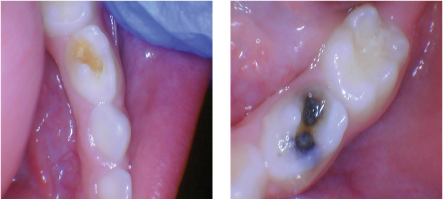
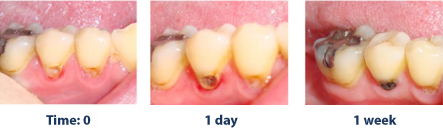
According to the ADA, SDF is simple to apply and especially helpful for patients who have difficulty sitting still during dental treatments, though it does not fill the cavity and the treated area will turn black. SDF requires reapplication twice a year.
"There's long been a big push to promote better dental health through fluoridation and telling people to eat less sugary foods.
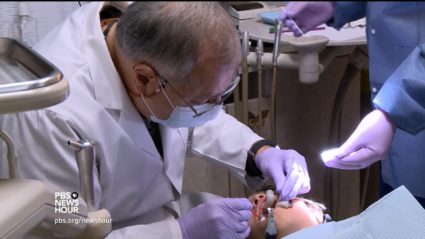
Despite those efforts, tooth decay remains a major public health issue. In fact, it's the most common chronic childhood disease, and 90 percent of all adults have cavities.
As many of us know, traditional treatments can often be painful, but a new pain-free, low-cost dental treatment could help all that."
Curodont Repair Fluoride Plus is a biomimetic treatment that helps reverse early-stage cavities and white spot lesions by rebuilding weakened enamel from within. Developed by vVardis, Curodont uses a peptide-based formula that guides your saliva's natural minerals — calcium, phosphate, and fluoride — back into damaged tooth structure, restoring strength without any drilling or discomfort. Dr. Boucher is a listed Curodont provider — find her on the vVardis clinic locator.
We use Curodont primarily for early cavities and white spots on front teeth and other visible areas, where the cosmetic staining of SDF would be undesirable. By catching decay early and treating it with Curodont, we can often prevent the need for fillings, crowns, or more invasive procedures down the road.
Curodont is applied to a dry tooth by using a sponge saturated with the Curodont solution. The sponge is held to the tooth for 5 seconds on each side of the tooth. Prior to placing the sponge, we clean the tooth with a prophy or pumice paste, and acid etchant.The entire procedure can take less than 3 minutes. After having it placed, you are not able to eat, drink, or rinse for 30 minutes. Curodont does not have a taste and does not cause any staining.
The peptide in Curodont, P-114, enables the calcium and phosphate ions in saliva to penetrate the cavity and precipitate hydroxyapatite crystals, which stops the cavity from progressing. It can also remineralize the damaged enamel.
Curodont is a fast application, minimally invasive, no-needle, no-drill alternative to treat small cavities.
Curodont works best as part of a consistent oral hygiene routine. For maximum effectiveness, patients should brush twice daily with fluoride toothpaste and clean between teeth at least once a day. Because Curodont treats early-stage lesions, it is not a substitute for fillings or crowns when decay has progressed to a more advanced stage — which is why early detection through regular dental exams is so important.
Contact us to see if Curodont is an option for you.
"The effects on promoting caries arrest and decreasing lesion size suggest that CR (Curodont) is a viable treatment option for initial caries lesions alongside other evidence-based interventions for initial caries lesions.
This finding is a clinically meaningful addition beyond the effect of behavior change and other preventive interventions."
"This represents a significant breakthrough...establishing a new category of drill‑free restoration of early-stage caries when traditional prevention has failed."
Both SDF and Curodont are non-invasive, no-drill alternatives to traditional cavity treatment, but they work differently and are suited to different situations. SDF is most effective for arresting active decay in any tooth, including molars and primary (baby) teeth. It works quickly and is very affordable, but it does stain the treated area dark. Curodont is ideal for early-stage cavities and white spot lesions, especially on front teeth where appearance matters. It causes no staining and promotes natural remineralization, but is limited to cavities that haven't progressed beyond the enamel.
During your exam, Dr. Boucher or Dr. Grams will evaluate the size, location, and stage of any cavities and recommend the treatment that gives you the best outcome. In many cases, non-invasive treatment can preserve your natural tooth structure and help you avoid more extensive procedures.
Dr. Liberty Boucher is proud to maintain memberships & foster affiliations with a variety of professional organizations not only in dentistry and oral health, but also with a commitment to the treatment of sleep apnea.


In addition to the above, Dr. Boucher is a member of the Wisconsin Sleep Society, the Chicago Dental Society, and the local Spear Education Study Club.
© University Hills Dental | 3320 University Ave, Madison, WI 53705 | (608) 238-8228